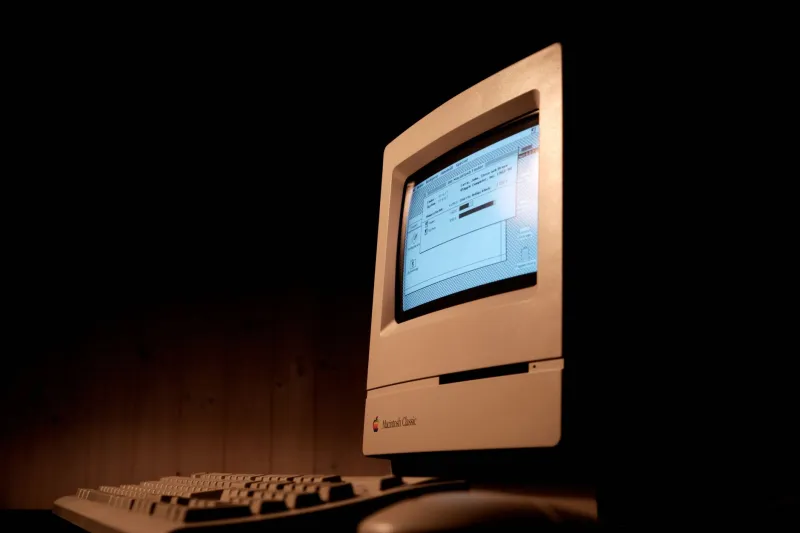
Die Hard Streaming: Why Some Creators Are Betting Their Careers on Platforms Already on Life Support
There's a certain kind of content creator who looks at a streaming platform's declining user numbers and sees opportunity instead of a warning sign. They're not delusional. They're not behind the times. In a lot of cases, they're actually ahead of everyone else.
Across the US, a quiet but real movement of streamers is deliberately choosing platforms on the verge of collapse — or already functionally dead — as their primary creative home. They're skipping the algorithmic meat grinder of YouTube and the saturated chaos of Twitch in favor of platforms most people couldn't name without Googling. And some of them are building the most loyal audiences in the business doing it.
The Counterintuitive Logic of Doomed Platforms
On the surface, streaming on a platform that might not exist in six months sounds like professional suicide. But spend some time talking to creators who've done it, and a different picture starts forming.
When a platform is small and struggling, the community dynamics shift in ways that matter. There's less noise. The algorithm isn't the gatekeeper — the streamer is. Viewers who show up on an obscure or fading platform aren't casual browsers who clicked in by accident. They made a deliberate choice to be there, which means they're already invested before the stream even starts.
"The people who find you on a platform nobody's heard of, they feel like they discovered something," says one streamer who built a following on Caffeine.tv before it quietly wound down its creator program. "That discovery feeling — that's loyalty you can't buy on Twitch."
This is what some in the creator economy are starting to call the Graveyard Effect: the counterintuitive phenomenon where streaming on a dying or defunct platform actually supercharges fan attachment. Scarcity, it turns out, applies to digital spaces just as much as it does to physical goods.
Platform Mortality as a Feature
Think about how people talk about bands they saw in tiny venues before they blew up. There's a social currency in being early, in being present for something fragile and impermanent. Streaming on a platform that might not survive the year produces that same energy — live and in real time.
Creators who've leaned into this describe their communities as disproportionately tight-knit compared to channels with far larger numbers. When everyone watching knows they're on borrowed time, the shared experience intensifies. Viewers become active participants in the community's survival rather than passive consumers scrolling past.
One creator who streamed exclusively on Mixer right up until Microsoft pulled the plug in 2020 said her Discord server — built almost entirely from Mixer refugees — remains the most active community she's ever had. "Mixer dying was genuinely painful," she told us. "But the people who came through that with me? They're not going anywhere. We survived something together."
That sense of shared survival is hard to manufacture on a dominant platform. Twitch and YouTube are too stable, too permanent. There's no urgency, no stakes. The community has nothing to rally around except the content itself, which is a much weaker adhesive than collective identity.
The Deliberately Obscure Strategy
Some creators aren't just stumbling onto dying platforms — they're actively seeking them out. They're scanning the landscape for services that have a real user base but are clearly on a downward trajectory, then staking a claim before the lights go out.
The reasoning is calculated. On a shrinking platform, discoverability is dramatically easier. Competition is low. The platform's own staff, desperate for content to justify their existence, will often promote smaller creators far more aggressively than any algorithm would. And if the platform does survive against the odds, you're positioned as a founding-era veteran.
If it doesn't survive? You take your community with you, and you arrive at your next home carrying the credibility of someone who built something real under difficult conditions.
It's a high-variance strategy, no question. But for creators who've already spent years grinding on platforms where their content disappears into an endless feed, the variance feels worth it.
The Risks Nobody's Pretending Don't Exist
This isn't a manifesto for abandoning stable platforms entirely. The risks are real and they're significant.
When a platform shuts down, it often does so without warning and without grace. Content can vanish overnight. Monetization programs evaporate. The email announcing the closure sometimes arrives the same week as the actual closure. Creators who've built their primary income stream on a dying platform can find themselves suddenly without revenue and scrambling to migrate an audience that may not follow.
There's also the discoverability ceiling. A platform with a shrinking user base can only give you so much organic reach before the math stops working in your favor. At some point, the same qualities that make the community tight-knit also cap its growth.
And not every small or struggling platform has a devoted community worth cultivating. Some are just bad products with bad interfaces and no real user affection — the kind of place where even the people who show up don't particularly want to be there.
What the Dominant Platforms Are Missing
Here's the uncomfortable question buried in all of this: why are some creators willing to accept instability and financial risk just to escape Twitch and YouTube?
The answer, pretty consistently, is that scale has made those platforms feel impersonal in ways that actually undermine what streaming is supposed to be. The intimacy, the sense of community, the feeling that what's happening in a stream matters — all of that gets diluted when you're competing against tens of thousands of other channels and your discovery is entirely at the mercy of an algorithm you can't see or understand.
Small, fragile platforms force a different relationship between creator and audience. The platform isn't the product. The community is. And communities built under pressure tend to hold together long after the platform that hosted them is gone.
The Long Game
The streamers who've made this work aren't treating dying platforms as endpoints. They're treating them as origin stories. The goal isn't to go down with the ship — it's to build something on the ship that survives the sinking.
In that sense, the Graveyard Effect isn't really about platforms at all. It's about what happens when a creator stops chasing the platform's audience and starts building their own. The dying platform is just the unusual context that makes it easier to see the difference.
For a certain kind of creator, that's not a bug in the strategy. It's the whole architecture.