The Grind That Doesn't Pay: Mental Health at Competitive Gaming's Forgotten Middle
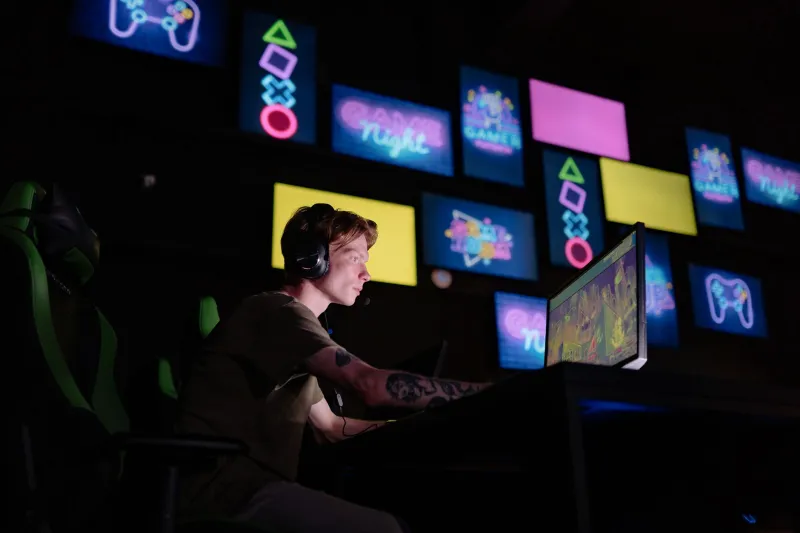
The highlight reel version of esports is easy to find. Championship brackets. Six-figure prize pools. Sponsored players with their own merchandise lines and Twitch subscriber counts that make your eyes water. That version of the story gets told constantly, and it's not false — those players exist, those tournaments are real, that money changes hands.
What doesn't get told nearly as often is the story of everyone else. The players one tier below viability. The competitors who are genuinely, measurably skilled — top few percent of the playerbase, consistent tournament performers, people who have dedicated years of their lives to a specific game — but who exist in a zone where the economics simply don't work. Where the grind is real but the payoff isn't.
That's the part worth talking about. And it's a lot darker than the highlight reel.
The Viability Trap
There's a threshold in competitive gaming that's almost impossible to see from the outside but that every mid-tier player knows intimately. It's the point at which you're good enough to believe viability is possible but not quite good enough to achieve it consistently. Good enough to keep trying. Not good enough to stop needing a day job.
Marcus, a 24-year-old from Atlanta who competes in a popular fighting game circuit, describes it as "the zone where you're too serious to have fun and not serious enough to have money." He's been competing for five years. He's placed in the top eight at regional tournaments. He streams three to four days a week to an audience that averages around 80 concurrent viewers. He works part-time at a shipping warehouse to cover rent.
"People think if you're competing at a certain level, you've made it," he said. "You haven't made it. You've just gotten good enough to see exactly how far away making it actually is."
That particular kind of clarity — being skilled enough to understand the gap, not skilled enough to close it — is psychologically brutal in ways that are hard to articulate to people outside the scene.
What Burnout Looks Like Here
Burnout in esports gets discussed mostly in the context of elite players. Team contracts that demand 12-hour practice days. The mental toll of international travel. The pressure of performing in front of massive live audiences. Those are real issues, and they deserve attention.
But burnout in the middle tier looks different. It's quieter. It's lonelier. It happens in apartments, not training facilities, in front of small audiences instead of stadium crowds.
Amanda, a 22-year-old competitor in a popular battle royale circuit based in the Pacific Northwest, described the texture of it: "You wake up and you're already tired. Not from playing — from the uncertainty. From not knowing if today is the day you should quit. From doing the math again and again and getting the same answer."
She's been streaming competitively for three years. She's had sponsorship conversations that went nowhere. She's placed well in online qualifiers that didn't come with prize money. She estimates she's spent more on tournament entry fees, equipment upgrades, and coaching than she's earned from competitive play by a margin of several thousand dollars.
"The community is supportive," she said. "But supportive doesn't pay for anything."
The Infrastructure That Isn't There
Pro esports organizations have, to varying degrees, started taking mental health seriously at the top level. Some orgs employ sports psychologists. A few have implemented mandatory rest periods. The conversation about player welfare has matured meaningfully in the past five years.
None of that infrastructure reaches the middle tier. There are no team psychologists for players who aren't on teams. There are no mandatory rest periods for people whose schedule is self-imposed. There are no HR departments, no union protections, no formal support structures of any kind.
What there is, mostly, is community — Discord servers, informal mentorship from slightly more established players, the shared understanding that comes from being in the same situation as the people around you. That's genuinely valuable. It's also not sufficient.
Dr. Priya Nair, a clinical psychologist who has worked with several gaming-adjacent clients, notes that the combination of factors present in mid-tier competitive gaming — financial precarity, identity investment, social isolation, unpredictable reward cycles — creates a particularly high-risk environment for anxiety and depression.
"The reward structure of competitive gaming is designed to keep you engaged," she said. "That's fine when you're playing casually. When your livelihood and self-worth are attached to it, the same mechanisms become genuinely harmful."
Why the Dream Persists
The obvious question — the one that hangs over every conversation about the competitive gaming middle tier — is why people keep doing it. The math doesn't work. The psychological cost is real. The success rate at any meaningful level of viability is, statistically, tiny.
The answers are complicated and worth taking seriously rather than dismissing.
For some players, the dream is still genuinely alive. They're improving. They see the gap closing. The grind feels purposeful because it's producing results, even if those results aren't yet financial.
For others, the game itself is the point — the competition, the community, the identity. Walking away from competitive play isn't just a career decision; it's an identity crisis. Who are you if you're not a competitor?
And for some, honestly, it's sunk cost. Years of investment create a psychological gravitational pull that's hard to escape even when the rational case for stopping is overwhelming.
Marcus put it simply: "I keep going because I don't know how to stop. I'm not sure that's a good reason. But it's the real one."
What Actual Support Might Look Like
The people we spoke to weren't asking for prize money they didn't earn or sponsorships they didn't merit. What they described wanting was more modest and more achievable: mental health resources built for their specific situation, not adapted from elite player programs. Community structures that normalize stepping back without treating it as failure. Honest industry conversation about the odds, rather than a media ecosystem that exclusively spotlights the outliers.
"Show us the people who tried and stopped," Amanda said. "Show us what that looks like. Because right now all we see is the people who made it, and it makes everyone who hasn't made it feel like they're doing something wrong."
The grind is real. The community is real. The talent is real. What's missing is an industry willing to look at the people it's built its ecosystem on — the enormous base of the competitive pyramid — and reckon with what it's actually asking them to pay.