The Weight of Knowing: When Deep Fandom Stops Feeling Like a Gift
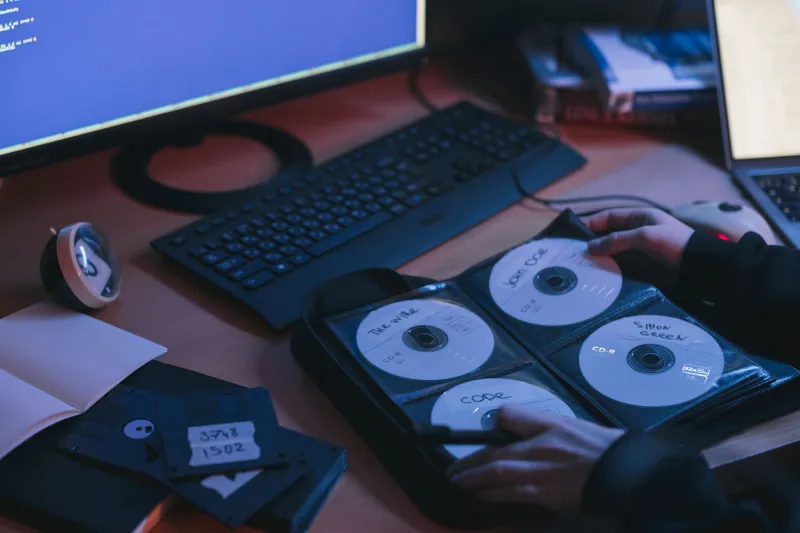
Somewhere in a suburb outside Columbus, Ohio, there's a guy with three external hard drives and a spreadsheet that would make a librarian cry. He can tell you the runtime of every episode of a mid-2000s flash animation series that aired on a now-defunct streaming portal nobody remembers. He can name the composer of the background music in a 1997 OVA that got a single North American VHS release before vanishing entirely. He has opinions — strong, detailed, historically grounded opinions — about a webcomic that ended in 2009 with fewer than 800 total readers.
He also hasn't had a conversation about any of it in about four years.
This is the curator's paradox. The deeper you go, the more you know. And the more you know, the fewer people exist who can meet you there.
The Accumulation Problem
Obsessive knowledge-building starts innocently enough. You find a thing you love. You want more of it. You start pulling threads — fan wikis, archive.org rabbit holes, obscure forum posts from 2003 that somehow still load. Before long, you're not just a fan. You're a keeper. You've got context that doesn't exist anywhere else in compiled form. You've watched things that technically no longer exist on any accessible platform. You've read every strip of a webcomic whose domain expired and whose creator moved on to a career in accounting.
At some point, the collection stops being about joy and starts being about stewardship. That shift is subtle, and it's where the weight starts.
Media historians and archivists talk about this in professional terms — the burden of institutional knowledge, the anxiety of being the last person who holds a complete picture of something. But for everyday superfans, there's no institutional support structure. No salary. No colleagues to hand the files off to. Just you, your drives, and a growing awareness that the thing you've dedicated real mental bandwidth to exists almost exclusively inside your own head.
When Expertise Becomes Isolation
There's a social contract implied in most fandoms: the more you know, the more you belong. That holds up reasonably well for major properties. Know everything about a flagship video game franchise or a prestige streaming series and you've got a whole community waiting to validate you. Reddit threads, Discord servers, YouTube essays — the infrastructure of shared enthusiasm is right there.
But slide far enough into the niche and that contract quietly expires. The forums are dead. The Discord has three members and the last message was posted fourteen months ago. The YouTube video you made about your favorite forgotten digital series got 200 views, and 40 of those were probably you.
This isn't just about low engagement numbers. It's about the specific emotional experience of having developed genuine expertise and having nowhere to put it. Curators of hyper-obscure content frequently describe a particular flavor of social friction — the moment at a party or in a group chat where they start to explain something they care about deeply, watch eyes glaze over within seconds, and make the quiet internal decision to just stop. Again.
Over time, that decision gets made faster. The enthusiasm gets front-loaded with disclaimers. It's this really obscure thing, you've probably never heard of it. The apology is baked in before the subject is even named.
The Badge and the Bruise
Here's what makes this complicated: the same knowledge that isolates also confers a real sense of identity and purpose. Knowing you're one of maybe a few dozen people in the country who holds a complete understanding of some forgotten corner of digital culture — that's not nothing. That's a form of distinction. It's a badge, even if nobody else can read what's written on it.
For a lot of these curators, that distinction becomes load-bearing. The expertise isn't just a hobby artifact. It's part of how they understand themselves. Which means the isolation that comes with it isn't just social inconvenience — it's a recurring reminder that the thing that makes you you is largely invisible to the world around you.
Some people handle this by doubling down on the archival work itself, treating the preservation as the point rather than the conversation. Others migrate toward smaller and smaller communities — not looking for big audiences, but for that one other person who gets it. The hunt for that person can become its own obsession.
The Maintenance Tax
There's also the practical side of this that doesn't get talked about enough. Keeping obscure media knowledge current — or even just intact — is ongoing work. Links die. Platforms shut down. File formats become unreadable. The person who ran the only active fan site for your favorite forgotten web series moves on, and suddenly half the context you relied on is gone.
Curators end up doing real preservation labor for free, often invisibly, because nobody else will. They mirror files. They re-upload content. They write wiki entries that may never get a second reader. They keep spreadsheets updated out of a sense of obligation to something that has no formal claim on their time.
Call it a maintenance tax. The deeper your investment, the higher the ongoing cost of keeping that investment from decaying. And unlike a financial investment, there's rarely a payoff moment. No liquidity event. Just the quiet satisfaction of knowing the thing still exists because you made sure it did.
Finding the Others
The story doesn't have to end in isolation, and for a lot of curators it doesn't. The internet is, among other things, a tool for finding the three other people in the country who share your exact niche obsession. Sometimes those connections happen. Sometimes a throwaway comment in a general forum leads to a DM thread that turns into a years-long correspondence with someone who actually understands what you're talking about.
Those connections hit differently than mainstream fandom interaction. There's a density to them. A relief. The shared language of people who've both done the deep work.
Platforms like CGI XIX exist, in part, because there's a whole ecosystem of people who've gone deep on things that don't fit neatly into mainstream entertainment coverage. The audience for obscure media isn't just consumers — it's curators, archivists, and knowledge-holders who've paid a real personal price for what they know.
Knowing Anyway
So what do you do with a burden that's also a badge? Most of the curators who've lived with this long enough arrive at some version of the same answer: you keep going, but you get honest about why.
The preservation isn't for an audience that doesn't exist yet. It's not a bet on future relevance. It's because the thing mattered, and mattering shouldn't require a crowd to validate it. The knowledge is real. The cultural artifact is real. The experience of caring about it is real.
That's not nothing. Even when it feels like it.